
Clear Aligners for Complex Cases in 2026: Can They Fix Overcrowding, Underbites and Large Gaps or Is It a Myth?
Clear aligners are a popular orthodontic option for straightening teeth. However, many patients wonder whether clear aligners complex cases 2026 can genuinely handle difficult problems such as severe crowding, underbites, overbites, and large gaps. Aligner technology has improved, but not every complex case suits invisible treatment.
How Clear Aligners Work in Complex Cases
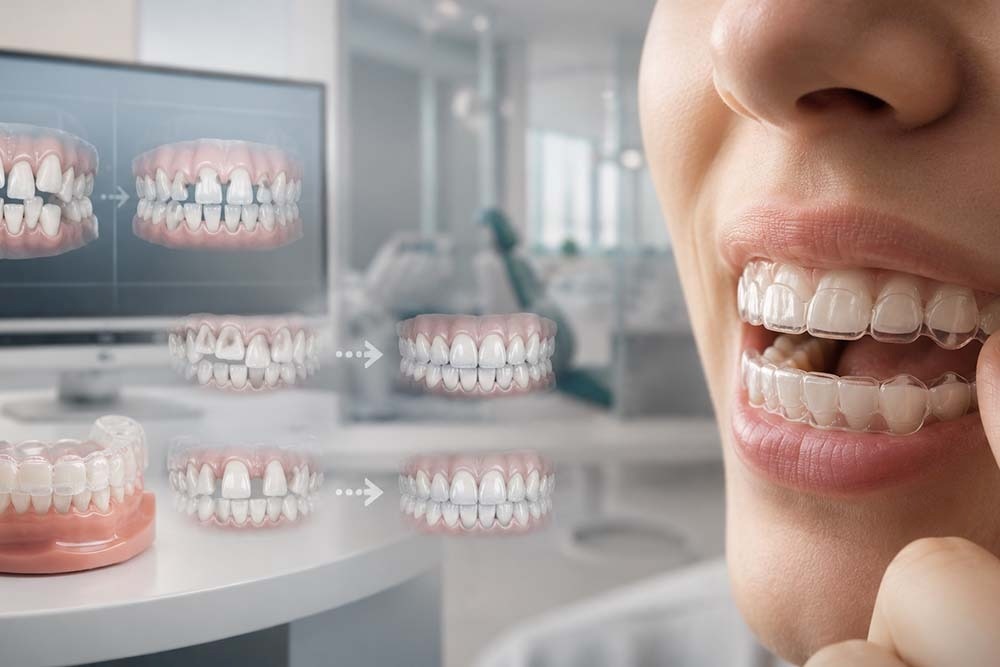
Clear aligners move teeth gradually using a series of custom-made trays. Each tray applies controlled pressure, helping teeth shift into better positions. For clear aligners complex cases 2026, orthodontists may also use attachments, elastics, bite ramps, or other techniques to improve movement and control.
Digital planning allows providers to map tooth movement before treatment. This can make invisible braces severe case treatment 2026 more effective than older aligner systems. Results still depend on diagnosis, patient cooperation, and bite complexity.
Can Aligners Fix Overcrowding?
Many people ask, can aligners fix overcrowding 2026, especially when teeth overlap or appear significantly rotated. In many cases, yes. Aligners can create space by expanding the dental arch, moving teeth backward, or using interproximal reduction, where small amounts of enamel are polished between selected teeth.
For moderate crowding, can aligners fix overcrowding 2026 is often answered positively when treatment is carefully planned. Severe crowding may still be treatable, but some patients may need tooth extraction or additional procedures.
When evaluating can aligners fix overcrowding 2026, an orthodontic assessment is essential because crowding is not only about appearance. Available bone, tooth size, jaw position, and bite relationship all affect whether aligners are appropriate.
Clear Aligners for Underbites and Bite Problems
The question of clear aligners for underbite Canada is increasingly common as more adults seek less noticeable orthodontic treatment. An underbite occurs when the lower teeth sit in front of the upper teeth when the mouth is closed.
Some mild to moderate underbites can be improved using aligners combined with elastics and planned tooth movements. Clear aligners for underbite Canada may be suitable when the issue is primarily dental rather than caused by significant jaw imbalance.
If an underbite is skeletal, meaning the jaw bones themselves are positioned incorrectly, aligners alone may not provide the desired correction. In these situations, clear aligners for underbite Canada may be part of a broader treatment plan involving braces, surgery, or specialist care.
What About Large Gaps?
Large spaces between teeth can be treated with aligners. The trays gradually move teeth toward each other while maintaining alignment and bite stability. The cause of the gap matters.
Spaces caused by missing teeth, unusually small teeth, gum conditions, or jaw-size differences may require additional treatment. In clear aligners complex cases 2026, cosmetic bonding, implants, veneers, or restorative dentistry may sometimes be recommended after orthodontic movement.
When Invisible Aligners May Not Be Enough
Invisible braces severe case treatment 2026 has expanded considerably, but clear aligners are not a universal solution. Certain severe rotations, major jaw discrepancies, impacted teeth, complex extraction cases, or significant bite problems may respond better to fixed braces.
Traditional braces give orthodontists direct control over each tooth through brackets and wires. This can make braces more predictable for complicated movements requiring substantial force or precise root positioning.
For patients considering invisible braces severe case treatment 2026, the best option should reflect clinical needs. A qualified dentist or orthodontist can explain whether aligners, braces, or a combination approach provides the safest and most predictable result.
The Importance of Patient Compliance
Clear aligners generally need to be worn for approximately 20 to 22 hours each day. Removing them too often can slow treatment and make planned tooth movements less predictable.
Complex cases require consistent wear because each stage depends on the previous aligner fitting properly. Patients must also attend progress appointments and follow instructions regarding elastics, attachments, or refinements.
FAQs
Q1: Can clear aligners fix severe overcrowding?
A: Sometimes. Severe overcrowding can be treated with aligners in selected cases, but procedures such as enamel reduction, expansion, or tooth extraction may be required. An orthodontic assessment determines whether aligners can safely create enough space.
Q2: Are clear aligners effective for underbites and overbites?
A: Yes, some dental underbites and overbites respond well to aligners, especially when elastics or attachments are used. Severe skeletal bite problems may require braces, surgery, or combined treatment.
Q3: What dental conditions cannot be treated with clear aligners?
A: Some impacted teeth, major skeletal discrepancies, extreme rotations, severe bite problems, and complex extraction cases may not be ideal for aligners alone. Treatment suitability depends on the individual diagnosis.
Q4: When is traditional braces the better option over clear aligners?
A: Traditional braces may be better when precise tooth control, major bite correction, difficult rotations, complex extractions, or significant root movement is required. The best choice should be based on clinical predictability, safety, and long-term stability.









Leave a Reply