
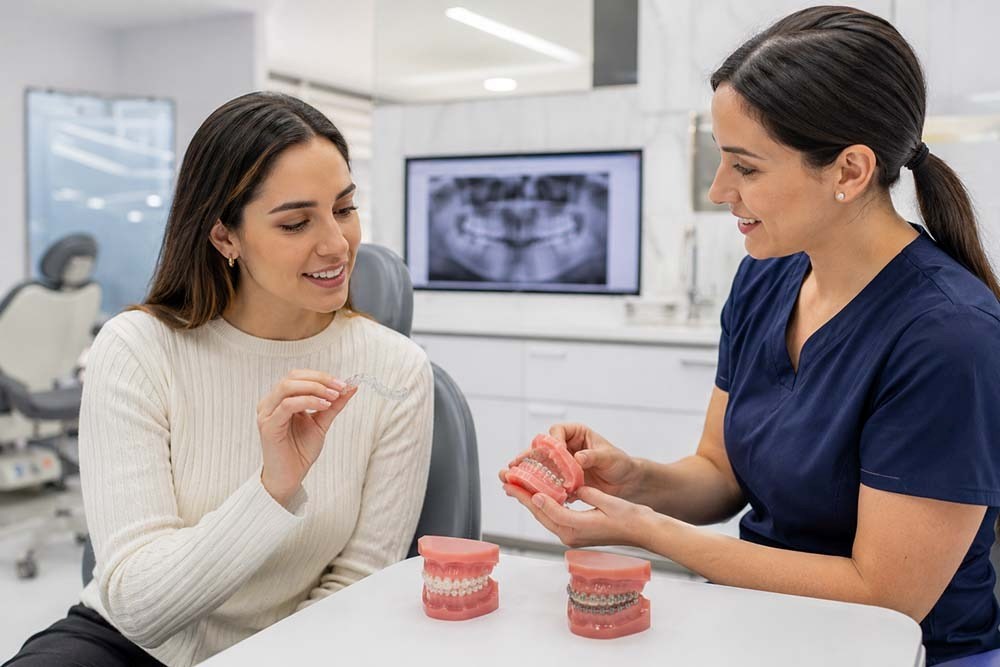
Invisible Dental Braces vs Traditional Braces vs Ceramic Braces: Which Wins in 2026?
Choosing the right orthodontic treatment in 2026 is no longer just about straightening teeth—it’s about balancing aesthetics, comfort, treatment speed, lifestyle, and cost. The three most common options today are invisible dental braces (clear aligners), ceramic braces, and traditional metal braces. Each system works differently, and each is better suited for specific types of dental corrections.
Understanding how they compare helps patients avoid choosing based only on appearance or marketing claims and instead focus on what actually works for their case.
How invisible braces, ceramic braces, and metal braces work
Invisible braces, often called clear aligners, are removable plastic trays that gradually shift teeth into position using a series of custom-made aligners. They are designed using digital scans and are replaced every few weeks as teeth move.
Ceramic braces are fixed orthodontic systems similar to metal braces, but they use tooth-colored or clear brackets that blend with natural teeth. They remain attached to teeth throughout treatment and use wires to apply continuous pressure.
Traditional metal braces use stainless steel brackets and wires and are considered the most established and widely used orthodontic system. They are fixed and continuously guide tooth movement with strong mechanical control.
Are invisible braces as effective as metal braces for all cases?
Invisible braces are highly effective for mild to moderate orthodontic issues such as spacing, minor crowding, and simple bite corrections. However, they are not always the best option for complex dental movements.
Metal braces remain the most effective option for severe crowding, major bite misalignment, tooth rotation, and cases requiring precise multi-directional control. This is because they allow orthodontists to apply stronger and more controlled forces compared to removable aligners.
In many standard cases, clear aligners and braces can achieve similar final results, but aligners require strict patient discipline, typically needing to be worn 20 to 22 hours per day for effectiveness.
Do invisible braces cost more than traditional braces?
Yes, invisible braces generally cost more than traditional metal braces. The higher cost is mainly due to digital scanning, custom manufacturing of multiple aligner sets, and frequent replacement stages throughout treatment.
Ceramic braces usually fall in between, being more expensive than metal braces but sometimes slightly less or similar in cost compared to clear aligners, depending on the clinic and complexity of treatment.
Metal braces remain the most cost-effective option in most cases because they use standardized components and require less custom fabrication technology.
How ceramic braces compare to clear aligners
Ceramic braces and clear aligners are often compared because both are considered more aesthetic alternatives to metal braces.
Ceramic braces are fixed, meaning they stay on the teeth throughout treatment and do not rely on patient compliance. They are effective for moderate to complex cases and function similarly to metal braces, but they are more discreet in appearance.
Clear aligners, on the other hand, are removable and nearly invisible, offering better comfort and oral hygiene. However, they require consistent usage and are less effective for complex orthodontic cases.
In general, ceramic braces are better for patients who want stronger control without visible metal, while clear aligners are better for those prioritizing aesthetics and flexibility.
Can I switch from metal braces to invisible braces mid-treatment?
Yes, switching between orthodontic systems is possible, but it depends on how far the treatment has progressed and the complexity of the dental correction.
Switching from metal braces to ceramic braces is usually straightforward because both use fixed systems. Switching from braces to clear aligners may also be possible, especially during the later stages of treatment when major tooth movement has already been completed.
However, switching treatment types may require a new digital scan, revised treatment planning, and potentially additional costs or extended treatment time. Orthodontists evaluate each case individually before approving a switch.
Which option is best overall in 2026?
There is no single “best” option for everyone. The ideal choice depends on dental complexity, lifestyle preferences, budget, and compliance ability.
Metal braces are best for maximum control and complex corrections. Ceramic braces offer a balance between effectiveness and aesthetics. Clear aligners are best for patients who prioritize appearance and flexibility and have mild to moderate alignment needs.
FAQ’s
Q1. Are invisible braces as effective as metal braces for all cases?
A: Invisible braces are effective for many mild to moderate cases, but metal braces are still more effective for complex tooth movements and severe bite issues.
Q2. Do invisible braces cost more than traditional braces?
A: Yes, clear aligners usually cost more than metal braces due to customization, digital planning, and multiple aligner sets required during treatment.
Q3. How do ceramic braces compare to clear aligners?
A: Ceramic braces are fixed and better for complex cases, while clear aligners are removable, more aesthetic, and better for mild to moderate corrections.
Q4. Can I switch from metal braces to invisible braces mid-treatment?
A: Yes, but it depends on treatment progress and case complexity. Your orthodontist may need to redesign your treatment plan, which can affect cost and duration.

Leave a Reply