
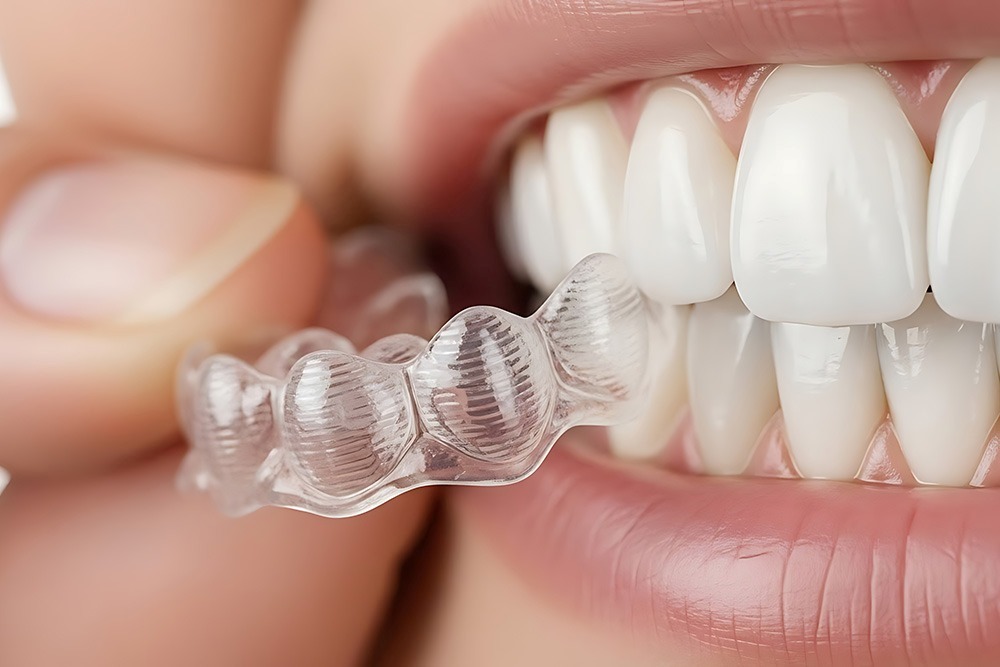
Clear Aligners in 2026: The Science Behind How They Move Your Teeth and Why Compliance Is Everything
Clear aligner therapy has become one of the most widely used orthodontic treatments for mild to moderate teeth alignment issues. In 2026, improvements in digital scanning, 3D treatment planning, and material science have made aligners more precise than ever. However, success still depends heavily on patient compliance and biological response. Understanding how clear aligners work in 2026 helps patients set realistic expectations and achieve better outcomes.
How Clear Aligners Actually Move Teeth
Clear aligners work by applying controlled, gradual force to teeth over time. Each aligner tray is slightly different from the previous one, guiding teeth into a new position in small increments.
The biological process behind tooth movement
Teeth are not fixed rigidly in bone. They are held in place by the periodontal ligament (PDL), a flexible tissue that responds to pressure.
When aligners apply force:
- Pressure is applied to one side of the tooth
- The bone on that side slowly breaks down (resorption)
- New bone forms on the opposite side (remodeling)
- The tooth gradually shifts into a new position
This cycle repeats with each new tray in a treatment series, which is central to clear aligner science and mechanics 2026.
How Aligners Shift Teeth Step by Step
Each aligner is designed using digital treatment planning software that maps out the entire tooth movement sequence in advance.
The process typically includes:
- 3D digital scan of teeth
- Computer simulation of movement stages
- Creation of multiple aligner trays
- Sequential wear of each tray (usually 7–14 days per tray)
- Gradual progression toward final alignment
Attachments (small tooth-colored bumps) are sometimes added to help aligners grip teeth more effectively and improve movement control.
What Happens If You Do Not Wear Aligners Enough Hours Per Day?
Compliance is one of the most important factors in clear aligner treatment compliance guide success.
Most aligner systems require 20–22 hours of daily wear.
If aligners are not worn enough:
- Teeth do not move as planned
- Previous movement can regress (relapse)
- New trays may not fit properly
- The treatment timeline becomes longer
- Final results may be less accurate
Inconsistent wear is one of the main reasons patients experience delayed or incomplete results.
How Many Aligner Trays Does a Typical Treatment Require?
The number of trays varies significantly depending on case complexity.
General estimates:
- Mild cases: 10–20 trays
- Moderate cases: 20–40 trays
- Complex cases: 40–80+ trays
Each tray represents a small step in the overall movement plan. Refinement trays are often added at the end to fine-tune final alignment.
This variation is why clear aligner treatment compliance guide planning is always individualized.
Why Clear Aligners Work Better for Some Cases Than Others
Clear aligners are highly effective, but not suitable for every orthodontic condition.
Aligners tend to work best for:
- Mild to moderate crowding
- Small gaps between teeth
- Minor bite corrections
- Relapse after braces
They are less effective for:
- Severe bite misalignment (Class II or III cases)
- Significant tooth rotation (especially molars)
- Complex jaw alignment issues
- Cases requiring major vertical movement
Biomechanics plays a key role in how predictable movement is. Some tooth movements are harder to control with removable trays compared to fixed braces.
Why Compliance Matters More Than Technology
Even though digital planning has advanced significantly in 2026, treatment success still depends on patient behavior.
Key compliance factors include:
- Wearing aligners 20–22 hours daily
- Changing trays on schedule
- Maintaining good oral hygiene
- Avoiding extended “off periods”
Without compliance, even the most advanced clear aligner science and mechanics 2026 systems cannot achieve predictable results.
Advantages of Clear Aligners
When used correctly, clear aligners offer several benefits:
- Nearly invisible appearance
- Removable for eating and brushing
- Fewer dental visits compared to braces
- Improved comfort with no metal brackets
- Digital tracking of treatment progress
These advantages make them especially popular among adults and professionals.
Limitations to Be Aware Of
Despite their popularity, clear aligners have limitations:
- Require strict discipline and compliance
- Not ideal for all orthodontic cases
- Can be lost or damaged if not handled carefully
- May require refinements or additional trays
Understanding these limitations helps set realistic expectations before starting treatment.
Conclusion
Clear aligners in 2026 represent a highly advanced and predictable orthodontic system, but their success still depends on biology and discipline. By understanding how clear aligners work 2026, patients can appreciate the gradual process of tooth movement and the importance of consistent wear. Strong compliance, combined with proper treatment planning, is what ultimately determines whether results are fast, stable, and successful.
FAQ’s
Q1. How do clear aligners actually move teeth?
A: Clear aligners move teeth by applying controlled pressure, which triggers bone remodeling around the tooth. Over time, this allows teeth to shift into new positions gradually.
Q2. What happens if I do not wear my clear aligners for enough hours per day?
A: If aligners are not worn 20–22 hours daily, teeth may stop moving properly, previous progress may reverse, and overall treatment time may increase significantly.
Q3. How many aligner trays does a typical treatment require?
A: It depends on complexity. Mild cases may need 10–20 trays, moderate cases 20–40 trays, and complex cases 40 or more trays, sometimes with refinement stages.
Q4. Why do clear aligners work better for some cases than others?
A: Aligners work best for mild to moderate alignment issues. Complex tooth movements, severe bite problems, or significant rotations may require braces for better control.






Leave a Reply